
TABLE OF CONTENTS
- Introduction
- What Makes Ride-On Toys Different?
- 7 Ways Ride-On Toys Make Playtime More Engaging
- How to Choose a Ride-On Toy for Your Child
- Electric vs Manual Ride-On Toys
- Making Ride-On Play More Meaningful
- Choosing Ride-On Toys at DEEP’S ELECTRONICS
- Frequently Asked Questions
- Conclusion
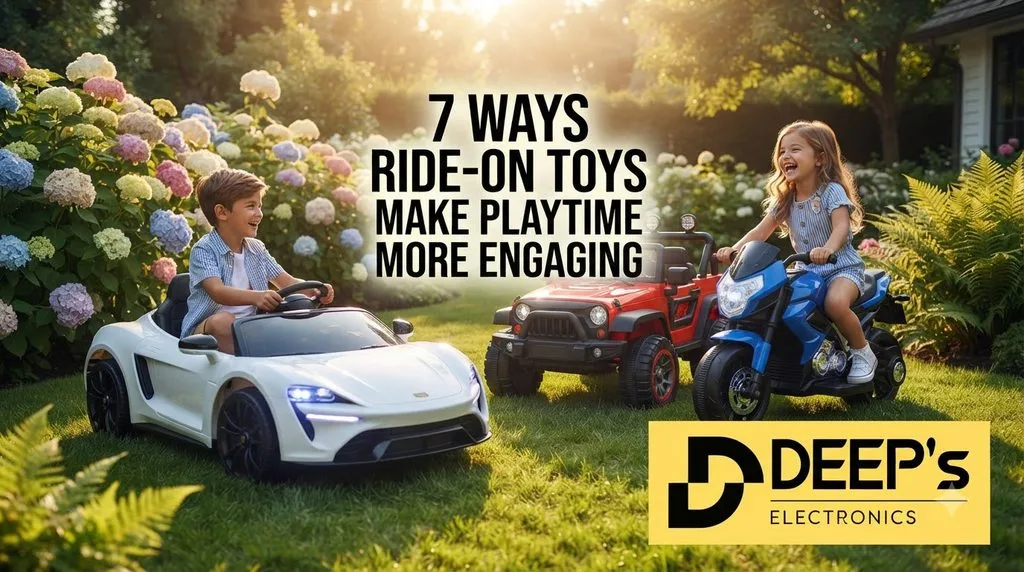
7 Ways Ride-On Toys Make Playtime More Engaging
Introduction
Children naturally enjoy activities that allow them to move, explore and make their own choices. That is one reason ride-on toys remain popular with families looking for alternatives to passive screen-based entertainment. From simple push-and-ride toys to battery operated vehicles, these toys can turn an ordinary play session into an active adventure.
Understanding the benefits of ride-on toys can help parents choose play equipment based on more than appearance. A well-matched ride-on toy can encourage movement, imaginative games, basic coordination and independent exploration while giving children an enjoyable way to spend their playtime.
The experience can be even more engaging when parents choose a ride-on toy according to the child’s age, abilities, available play space and preferred style of play.
Let’s look at seven practical ways these toys can make children’s playtime more interactive and enjoyable.
What Makes Ride-On Toys Different?
A ride-on toy gives children an opportunity to become part of the action rather than simply watching or handling a stationary toy.
Depending on the design, a child may sit, push, steer, pedal or operate the toy. Some models are designed for manual movement, while electric ride-on toys use a battery-powered motor and controls.
The benefits of ride-on toys come largely from this combination of movement and pretend play. Children can imagine that they are driving a car, riding a bike, operating a tractor or exploring an outdoor route.
This creates a different type of play experience compared with conventional toys.
7 Ways Ride-On Toys Make Playtime More Engaging
1. They Encourage More Active Play
One of the noticeable benefits of ride-on toys is that they can encourage children to include movement in their play.
Instead of remaining in one place, children can move around a suitable play area while enjoying their activity. Depending on the toy, movement may involve pushing with the feet, steering, pedalling or operating simple controls.
This makes play feel more dynamic.
For parents trying to create a balanced play routine, a ride-on toy can therefore become one option for encouraging active entertainment.
However, the amount of physical activity varies between different designs. A manually operated ride-on toy may require more physical effort than a motorized model.
2. They Turn Ordinary Play Into Pretend Adventures
Children often learn through imagination, and ride-on toys can provide a physical setting for imaginative games.
A child sitting in a toy car may pretend to be going on a family road trip. A ride-on tractor can become part of a farm game, while a toy bike may become part of an imaginary journey around the neighbourhood.
This is another important aspect of the benefits of ride-on toys: the toy itself can become part of a larger story.
Parents can make this experience even more interesting by creating simple play scenarios such as:
- Going on a pretend shopping trip
- Exploring a make-believe farm
- Driving to a fictional destination
- Creating a mini obstacle route
- Going on an imaginary adventure
The goal is not complicated gameplay. It is simply giving children opportunities to create their own stories.
3. They Add Steering and Coordination to Play
Many ride-on toys involve some combination of steering, movement and direction control.
These actions can make play more interactive because the child needs to pay attention to where the toy is going and how it is being controlled.
For example, steering a ride-on car around an open space introduces a simple relationship between hand movement and vehicle direction.
This is one reason coordination is frequently discussed among the benefits of ride-on toys.
Parents should still choose a toy that matches the child’s developmental stage and follow the manufacturer’s instructions. Younger children may require closer supervision, especially when using motorized models.
4. They Can Encourage Independent Exploration
Children often enjoy having some control over their own play.
A ride-on toy can provide opportunities for children to decide where they want to go within an appropriate play area, how they want to use the toy and which pretend-play story they want to create.
This sense of participation can make playtime feel more personal.
The benefits of ride-on toys are therefore not limited to physical movement. The experience can also involve simple decision-making and exploration.
For younger children, parents can stay nearby and guide the activity. As children become more comfortable with the toy, they may naturally create their own games within the boundaries set by adults.
5. They Can Make Outdoor Play More Interesting
Outdoor play can sometimes become repetitive when children have limited activities available.
A ride-on vehicle can introduce a new element to the play area. A garden, driveway or other appropriate private space can become a setting for simple riding games.
This is particularly relevant for children who enjoy vehicles and movement.
Popular categories include:
| Ride-On Toy Type | Typical Play Style |
|---|---|
| Kids Electric Cars | Pretend driving and exploration |
| Kids Electric Bikes | Vehicle-themed active play |
| Kids Electric Scooters | Riding and movement |
| Kids Ride-On Jeeps | Adventure-style pretend play |
| Kids Ride-On Tractors | Farm and imaginative games |
| Manual Ride-On Toys | Push-and-ride activities |
The benefits of ride-on toys can vary considerably depending on the type of toy and how the child uses it.
Outdoor riding should always take place in an age-appropriate, suitable area with adult supervision.
6. They Give Parents More Ways to Join the Fun
Ride-on play does not have to be an activity that children do completely alone.
Parents can participate by creating imaginary destinations, setting up simple routes or joining pretend games.
For example, a parent might create a pretend delivery game where the child drives from one point to another. Another simple activity could involve following a marked path around a safe play area.
These activities can turn a ride-on toy into a shared family play experience.
Among the benefits of ride-on toys, this social element can be especially valuable because the toy becomes a starting point for interaction rather than simply another object in the playroom.
7. They Can Keep Vehicle-Loving Kids Interested in Play
Some children are naturally fascinated by cars, bikes, tractors, jeeps and other vehicles.
For these children, a ride-on toy can connect their interests with an interactive play experience.
Instead of simply looking at pictures or toy vehicles, they can physically sit in a child-sized vehicle and engage with it.
This is one of the most practical benefits of ride-on toys for parents looking for a gift based on a child’s interests.
A child’s preferences should still guide the purchase. Some may enjoy cars, while others may prefer bikes, scooters, tractors or other ride-on designs.
How to Choose a Ride-On Toy for Your Child
The benefits of ride-on toys are easier to experience when the toy is appropriate for the child.
Before purchasing, consider these factors:
Age and Manufacturer Guidance
Always check the recommended age range and instructions provided for the particular product.
Available Space
Think about where the toy will actually be used. A large ride-on vehicle may require considerably more room than a compact model.
Manual or Electric Operation
Decide whether your child would enjoy physically pushing or pedalling the toy or would prefer a battery-operated riding experience.
Child’s Interests
Cars, bikes, jeeps, tractors and scooters provide different styles of imaginative play. Choosing according to the child’s interests can make the toy more appealing.
Supervision
Children should use ride-on toys in suitable areas under appropriate adult supervision. Motorized models require particular attention to operating instructions and the manufacturer’s safety guidance.
Electric vs Manual Ride-On Toys
Both electric and manual models can create engaging play, but their experiences are different.
| Feature | Electric Ride-On | Manual Ride-On |
|---|---|---|
| Movement | Battery-powered motor | Child-powered movement |
| Controls | May include pedal, steering and switches | Often push, pedal or foot-powered |
| Play Style | Driving-style pretend play | More physically active riding |
| Setup | Requires battery charging | Usually simpler |
| Maintenance | Battery and toy components need attention | Generally simpler |
| Best Consideration | Child’s interest and suitable supervision | Child’s ability to move the toy |
Neither type automatically provides the same experience for every child. The right choice depends on age, ability, space and preferred play style.
How to Make Ride-On Play More Meaningful
Simply buying a ride-on toy is only the beginning. Parents can make playtime more engaging by introducing small challenges and stories.
Try activities such as:
- Create a route: Use safe, visible markers to create a simple path.
- Build a story: Turn the ride into a pretend delivery, rescue or adventure mission.
- Change the destination: Give children different imaginary places to visit.
- Play together: Join the child and create a family game around the ride-on vehicle.
- Keep sessions varied: Combine riding with other age-appropriate activities.
These simple ideas can help children use the same toy in different ways rather than repeating one activity every time.
Choosing Ride-On Toys at DEEP’S ELECTRONICS
At DEEP’S ELECTRONICS, the online brand of Shree Mahalaxmi Electronics, parents and families can explore a growing range of Kids Electric Toys and related ride-on categories. The collection is focused on helping families find child-friendly vehicle-style toys for play, gifting and everyday entertainment.
Depending on the child’s interests, shoppers can explore categories such as Kids Electric Cars, Kids Electric Bikes, Kids Electric Scooters, Kids Ride-On Jeeps and Kids Ride-On Tractors.
For a purchase, it is always useful to compare the product’s recommended age, dimensions, operating method, available space and features rather than choosing only on appearance.
Suggested internal links:
- Kids Electric Toys
- Kids Electric Cars
- Kids Electric Bikes
- Kids Electric Scooters
- Kids Ride-On Jeeps
- Kids Ride-On Tractors
- Battery Operated Ride-On Toys
This approach can help parents make a more informed choice while keeping the shopping experience focused on the child’s actual needs.
Frequently Asked Questions
1. What are the main benefits of ride-on toys?
The benefits of ride-on toys can include encouraging active play, supporting opportunities for coordination, promoting imaginative play, allowing exploration and making vehicle-themed games more interactive.
2. Are ride-on toys suitable for young children?
Many ride-on toys are designed for specific age groups. Parents should always check the manufacturer’s recommended age, instructions and product requirements before purchasing.
3. Are electric ride-on toys better than manual ones?
Electric and manual ride-on toys offer different play experiences. Electric models provide battery-powered movement, while manual toys may involve pushing, pedalling or foot-powered movement. The suitable choice depends on the child and intended use.
4. Can ride-on toys be used indoors?
Some compact ride-on toys may be suitable for appropriate indoor spaces, but parents should consider the toy’s size, movement, flooring and available space. Always follow the manufacturer’s instructions.
5. Do ride-on toys encourage outdoor play?
They can encourage outdoor play by giving children an additional movement-based activity. However, the actual experience depends on the toy, child and available play environment.
6. What should parents check before buying a ride-on toy?
Check the recommended age, dimensions, weight guidance, operating method, battery requirements where applicable, play environment and manufacturer’s instructions.
7. Are ride-on toys good birthday gifts?
Ride-on toys can be an interesting birthday gift for children who enjoy vehicles and active play. The best choice depends on the child’s age, interests, available space and the specific toy’s requirements.
Conclusion
The benefits of ride-on toys go beyond simply giving children something to ride. They can introduce movement, imaginative storytelling, exploration and interactive play into a child’s routine.
From kids electric cars and ride-on jeeps to manual riding toys and electric bikes, different designs create different experiences. The key is choosing an option that matches the child’s age, interests, abilities and play environment.
Parents can also make the experience more engaging by creating simple games, joining pretend adventures and encouraging children to explore the toy responsibly.
A ride-on toy does not need complicated features to make playtime enjoyable. Sometimes, a little movement and imagination are enough to turn an ordinary afternoon into an exciting play adventure.
Looking for engaging vehicle-themed toys for your child? Explore the Kids Electric Toys range from DEEP’S ELECTRONICS and compare suitable ride-on options based on age, play style, space and product features. Choose thoughtfully and make every play session more active, creative and enjoyable.